

A message landed in my inbox yesterday that I’ve been hearing variations of for years now.
“I’ve been in therapy for three years. I’ve done the trauma work, processed my childhood, learned to set boundaries. I’ve worked through it all but I keep finding myself in the same situations. I know I’m healing, but I feel… stuck. Like there’s another layer I can’t reach.”
The woman who wrote this—let’s call her Alannah—had articulated something that hovers in the margins of our contemporary wellness culture but rarely gets named directly: the ceiling of conventional healing.
We live in an era obsessed with healing. Therapy has been democratized, trauma has been popularized, and “doing the work” has become both a moral imperative and a cultural currency. We speak of healing journeys the way previous generations spoke of career paths: as linear progressions toward a definable endpoint.
But what happens when you reach that endpoint and discover it’s not actually an endpoint at all? What happens when you’ve “healed” but still feel like something essential is missing?
The Therapeutic Industrial Complex
The modern therapeutic model, for all its genuine benefits, operates within a medical framework designed around pathology and restoration. Its primary mandate is to return you to a baseline of functioning, to help you process trauma, manage symptoms, and develop coping strategies. This is profound and necessary work. But it’s also inherently limited.
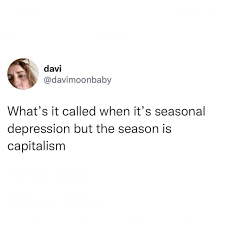
Psychologist James Hillman, in his critique of contemporary psychology, argued that our therapeutic culture has become obsessed with personal healing at the expense of what he called “soul-making”: the deeper work of meaning-creation and authentic becoming. Similarly, psychiatrist Thomas Szasz spent decades documenting how the medical model of mental health often pathologizes normal human responses to abnormal circumstances, turning existential questions into diagnostic categories. As the memes say: do you have depression or are you just living through late-stage capitalism?
Even Carl Jung, whose work forms the foundation for much of what we now call depth psychology, warned against the trap of endless analysis without transformation. Jung once said,
The privilege of a lifetime is to become who you truly are.
but “becoming who we truly are” requires the courage and frameworks to move beyond mere survival and self-understanding into active creation and contribution.
The therapeutic model excels at helping us survive our past and manage our triggers. It can help us process what happened to us, but it often falls short when we start asking: What wants to happen through us?
The Missing Stages
This is where alchemy—as both philosophical framework and practical map—offers something that conventional healing modalities often miss.
While therapy tends to focus on what alchemists would call nigredo (the breaking down, the shadow work, the confrontation with what’s wounded), it rarely provides guidance for the stages that follow.
Albedo, the washing, the softening, the emergence of insight, this is often where therapeutic work concludes. You’ve processed the trauma, you understand your patterns, you’ve developed healthier coping mechanisms. You’re “healed.”
But then what?
Classical alchemy teaches us that breakdown and integration are only the beginning of transformation, not its culmination. After Albedo comes citrinitas, the yellowing, the emergence of discernment and clarity, which represents the soul’s capacity to see not just its own patterns but the deeper patterns operating in the world. This is where wisdom begins to emerge from experience, where personal healing starts to alchemize into broader insight.
And rubedo, the reddening, the final stage, is about embodied creation and meaningful contribution. It’s about taking everything you’ve learned through your healing journey and asking: How does this serve something larger than my own restoration?
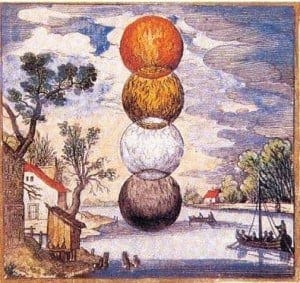
Most people cycling through therapy, self-help, and wellness culture get stuck oscillating between nigredo and albedo, breakdown and integration, shadow work and healing, without ever moving into the creative and contributory phases of their transformation. They become professional healers of their own wounds, endlessly refining their self-understanding without ever asking what that understanding is meant to create or what they’re role as a healed and self-aware individual is in the world.
Beyond the Personal Development Trap
Which leads me to another issue with our contemporary healing culture that begs examination: its relentless focus on the individual. While personal healing is essential, the atomized approach to transformation that dominates our therapeutic landscape extends from the very individualism that creates much of our suffering in the first place.
Indigenous healing traditions, by contrast, have always understood healing as fundamentally relational and communal. You don’t heal in isolation—you heal in relationship to your ancestors, your community, your environment, and your purpose within the larger web of existence. The Lakota concept of mitákuye oyás’iŋ, meaning “all my relations”, embeds healing within an interdependent context connecting all things animate and inanimate that our therapeutic culture (and "modern" culture as a whole) has largely abandoned.
As Bell Hooks put it,
Rarely, if ever, are any of us healed in isolation. Healing is an act of communion.
When healing becomes purely personal, it can paradoxically become another form of self-absorption. We become connoisseurs of our own psychology, experts in our own dysfunction, so addicted to the familiar territory of our own processing that we’re afraid to turn outwards. We mistake understanding our patterns for transcending them, and we confuse feeling better with becoming more.
The Alchemical Alternative
What alchemy offers—and what I’ve been developing in my work with students over the past several years—is a framework that honors the necessity of healing while recognizing it as preparation for something greater. It provides a map for the territory beyond therapy, a way of working with transformation that doesn’t end with feeling better but begins there.
In alchemical terms, your wounds are not problems to be solved but raw materials to be transformed; your challenges are no longer obstacles to overcome but initiations to undergo; and healing isn’t a destination to reach, but a foundation from which to create.
This doesn’t mean bypassing the legitimate work of therapy or rushing through necessary healing. It means understanding that work within a larger context, and recognizing that your personal transformation is ultimately in service of something beyond your personal comfort. It means asking new questions, broader questions. Instead of “How do I heal?” or “How do I feel better?”, we start asking “How do I serve the healing of the world through my own transformation?”. Instead of “How can I be more seen/understand?”, we ask, “Who can I see/understand better today?”
What Comes Next
If you recognize yourself in Alannah’s message, if you’ve done the therapeutic work but feel like there’s another layer waiting to be accessed, then you might be ready for what comes after healing. You might be ready to discover that your transformation was never just about you.
The world is become overflowed with people who have "figured themselves out". Now we needs people who have figured themselves out and are willing to offer their gifts in service of something larger. The world needs people who understand that healing is not the endpoint of transformation but the beginning, its the composting that makes new growth possible. We need people who are ready to offer themselves at the "altar of creation" as my friend Yuval puts it, to speak with their authentic voice, and create with their essential fire.
In the work of "soul-making", of becoming who you’re meant to be in service of what the world needs, healing is just the beginning.
[see the message below if you’d like to find out more.]
Thank you for reading beautiful people, and until next time, safe travels <3
Elianne
Unlike the isolating work of personal healing, Alchemy is best done in community, with guides who understand the territory and companions who are walking the same path.
If any of this resonates and you’re ready to go deeper in your journey of becoming, early applications for this year’s Alchemy 101 program close on September 1st, and early applicants who are accepted will receive an extra special discount on their enrollment fee. You can find more information on the application page.
If you're curious about what lies beyond the therapy ceiling but are still too new to alchemy to know how deep you'd like to go, I invite you to explore the Alchemy Gateway, a free crash course that will help you assess where you are in the alchemical process and what comes next.
For all my other offers and ways to work with me, please check out my website.
I am unable to even Begin To Express How Profound, Necessary & majkl This Essay Is...
I have felt this fully & now have that feeling expressed in a superbly Eloquent Way which not only identifies the Current State of Things but more importantly offers Next Stage Answers/Directions...Blessings Blessings Blessings & Tons of Love to One of My Favorite Sources of Enduring Wisdom/Perspective...🙏🏼💖✨🙇♂️🌌🌈
You have a way of giving me a hand exactly when I need a hand to hold. Love you 💛